Two similar terms, different service plans
Office cleaning and janitorial services are often used as though they mean the same thing. Both help keep commercial buildings presentable and functional, but the service model can differ in frequency, staffing, and the range of tasks included. For a Reno business, the useful question is not which label sounds better. It is what work needs to happen, how often, and who will be responsible.
A small office with predictable traffic may be comfortable with scheduled cleaning after hours. A larger, busier property may need routine janitorial visits plus attention during the working day. Define these requirements before requesting bids.
What a typical office cleaning plan covers
An office cleaning plan is commonly built around recurring visits at agreed times. Tasks may include emptying trash receptacles, dusting accessible surfaces, vacuuming carpets, mopping hard floors, cleaning restrooms, and wiping agreed high-touch surfaces. Breakrooms and meeting rooms may be included according to the contract.
Frequency depends on building use. A quiet professional office might not need daily service, while a busy reception area or shared workspace can accumulate mess much faster. The written scope should identify rooms, cleaning tasks, and the days of service so the business and cleaner have the same expectations.
When a janitorial program makes more sense
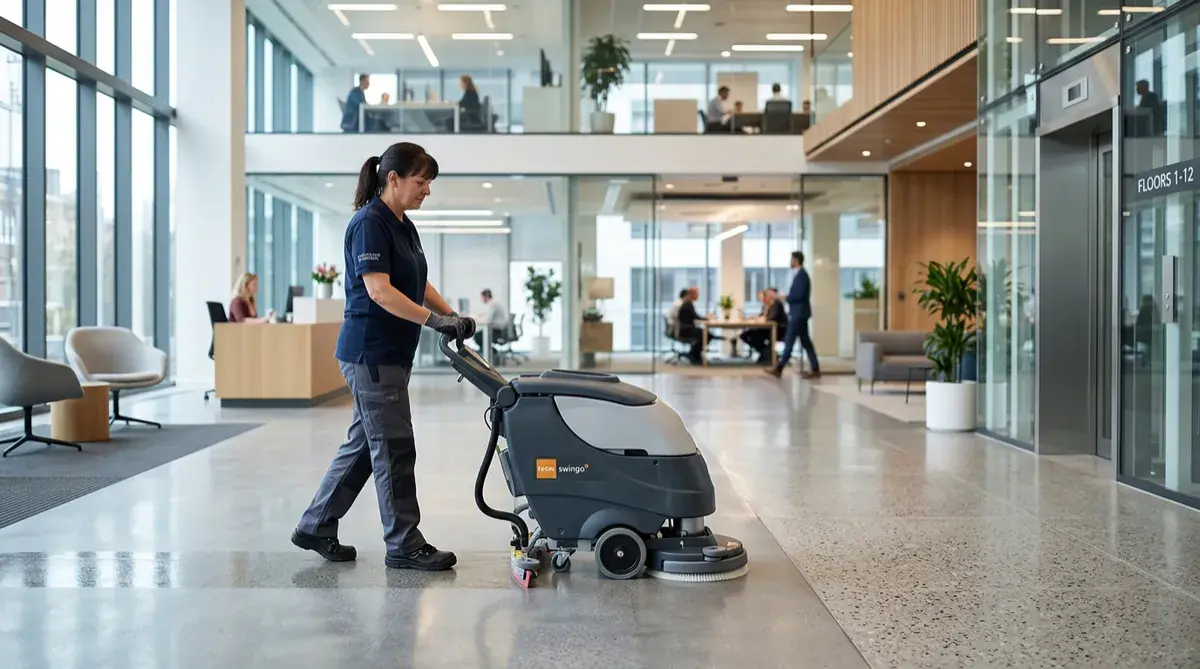
Janitorial service can describe a wider ongoing maintenance program. Depending on the site, this may include frequent restroom checks, supply restocking, entrance care, floor maintenance, and periodic quality inspections. Larger facilities may divide work across multiple service windows or cleaning teams.
Do not assume specialty services are included. Carpet extraction, floor stripping and waxing, construction cleanup, exterior window work, hazardous-material removal, and equipment servicing may require separate pricing or qualified vendors.
The value of daytime porter coverage
A day porter focuses on visible issues that arise while a building is occupied. Examples include replenishing restroom supplies, addressing an entrance spill, removing overflow trash, and checking common areas after periods of heavy traffic. The porter does not replace a thorough scheduled cleaning program; the roles complement each other.
This approach can be useful in retail sites, busy office buildings, shared facilities, and locations where overnight cleaning alone cannot keep up with demand.
Questions to ask before comparing proposals
- Which rooms and surfaces are included?
- How many visits per week are planned, and at what times?
- Who provides paper products, soap, liners, and equipment?
- How are access, security, and alarm instructions handled?
- What is excluded or billed as a separate project?
- How are missed tasks and changes reported?
Price comparisons only help when vendors are quoting the same tasks. The number of restrooms, types of flooring, occupancy, and cleaning hours can materially change the workload even when two buildings have similar square footage.
Build a cleaning plan around your facility
Yardie Cleaning works with commercial facilities in Reno and surrounding Northern Nevada communities. A walkthrough allows the team to review your actual needs and prepare a defined commercial cleaning scope rather than rely on guesswork.
To discuss recurring office cleaning, janitorial support, or a project-specific request, visit our booking page and request a walkthrough.